


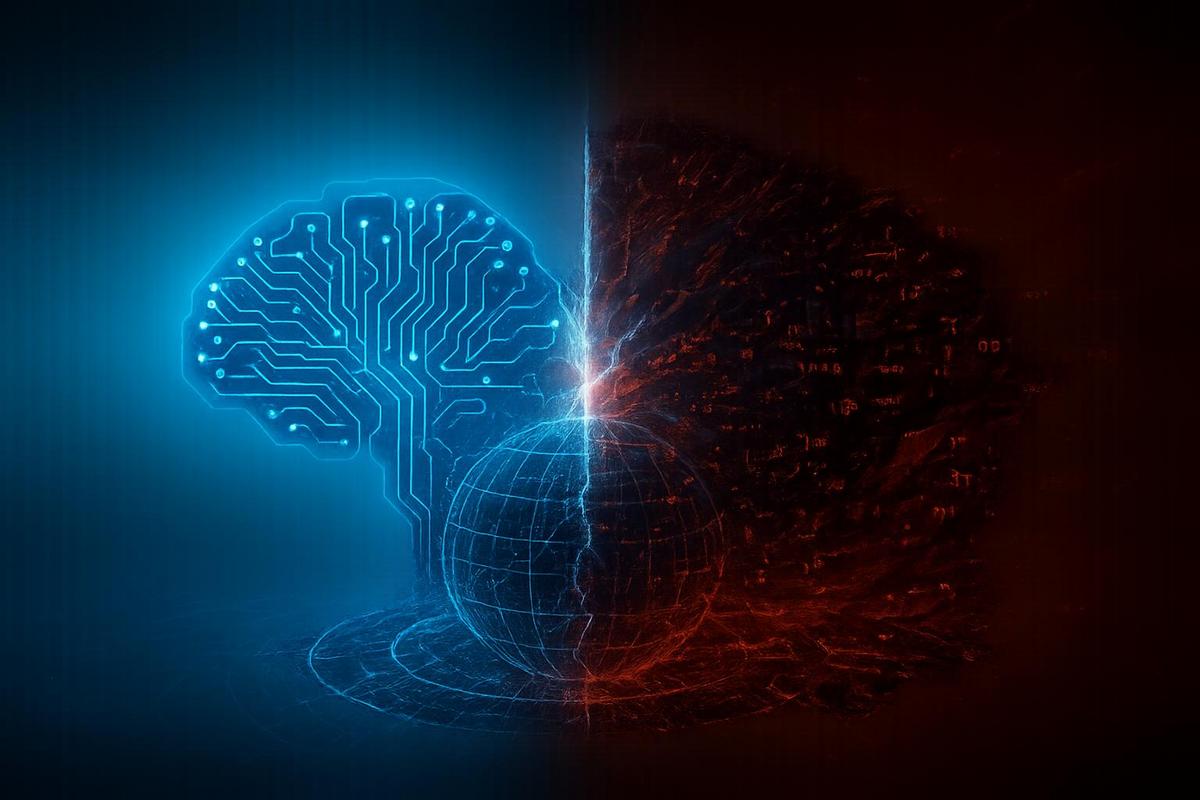
Microsoft’s newly released 2025 Digital Defense Report signals a major turning point in global cybersecurity strategy, spotlighting artificial intelligence as both a rising threat vector and a critical defense mechanism. The report presents a stark warning to organizations and governments: adapt swiftly to an AI-driven threat landscape or risk catastrophic security breaches.
Cybersecurity at a Breaking Point
Microsoft’s report, spanning 85 pages, outlines a cyber threat environment now defined by scale, speed, and sophistication. The company processes 100 trillion security signals daily, blocking some 4.5 million new malware threats every 24 hours. An army of 34,000 cybersecurity professionals interprets these signals in real time to combat evolving digital dangers.
The rise in financially motivated cybercrime has tipped the scales. More than 50% of attacks now aim to extract direct profit, relying on ransomware, info-stealers, and monetized data breaches. Cybercrime has matured into an organized, resourceful industry, empowered by automation and low-barrier toolkits available on the dark web.
AI: The Double-Edged Sword
Artificial Intelligence is reshaping cybersecurity—with both peril and promise. According to the report, AI now serves attackers and defenders alike, creating a complex arms race defined by machine learning capabilities and generative design.
AI as an Attack Tool
Cybercriminals increasingly deploy AI to mount large-scale, adaptive, and evasive campaigns. Attackers are using generative AI to craft deeply personalized phishing messages that achieve three times higher success rates and reap up to 50 times more profit than traditional techniques.
AI also enables automated lateral movement, allowing malware to propagate through networks without human direction. Evasive malware variants are using AI to bypass installed detection tools and mimic legitimate behavior, frustrating legacy defense systems.
Even more concerning, threat actors are now hijacking AI systems themselves by injecting malicious prompts or corrupting datasets, leading to model collapse, data leakage, and unauthorized decisions.
AI as a Defensive Engine
On the defensive side, Microsoft highlights AI as essential to managing the scope and complexity of digital threats. AI-powered systems can:
- Detect anomalies at scale in near real-time
- Automate threat containment without human delay
- Continuously learn from new tactics employed in the wild
- Reduce detection blind spots across infrastructure
Tools like Microsoft Sentinel illustrate how security teams can shift from reactive postures to proactive defense using machine-assisted intelligence pipelines.
Human Identity: The Weakest Link
Despite technological advancements, human error remains the top vulnerability. Microsoft reports that:
- 28% of breaches begin with phishing or social engineering
- 18% target unpatched internet-exposed services
- 12% exploit insecure remote access systems
Attackers now frequently skip network infiltration altogether by leveraging infostealer malware to access systems using stolen credentials sourced from the dark web. In effect, they no longer “break in”—they simply “log in.”
Microsoft emphasizes the broad deployment of phishing-resistant multifactor authentication (MFA) as the most effective safeguard, capable of blocking over 99% of unauthorized login attempts. However, user fatigue, loss of verification tools, and friction in reset procedures hamper widespread adoption.
Nation-State Threats and Human Infiltration
The report sheds light on increasingly complex nation-state cyber operations, driven by geopolitical motives including espionage, economic sabotage, and intellectual property theft. Targets range from IT vendors and universities to think tanks and government entities.
Microsoft also identifies a novel strategy: North Korea’s remote worker infiltration program. The regime allegedly embeds citizens in foreign organizations under false identities to harvest sensitive data and extend influence, marrying traditional espionage with digital employment ecosystems. This long-range tactic redefines the national security dimensions of cyber risk.
Response Time Matters More Than Ever
In a section titled “What happens when you hesitate?”, Microsoft stresses that response speed is now the most decisive factor in determining the outcome of a cybersecurity incident. Attackers are compressing the time between breach and impact, forcing organizations to rely on automated tools that react instantaneously—ideally within seconds.
Morocco Faces Mounting Cyber Risks
Morocco has not been immune to the global uptick in cyber threats. The kingdom recorded over 21 million cyberattack attempts in early 2025 alone, targeting sectors increasingly shaped by AI, Web3, and cloud transformation.
While the Moroccan cybersecurity market has grown to roughly $150 million USD in 2025—and is projected to surpass $200 million USD in the near term—the pace of threat escalation continues to outstrip many organizations’ preparedness. The local industry’s Compound Annual Growth Rate (CAGR) of 9.51% between 2025 and 2033 reflects increasing investment but also mounting urgency.
Mixed Readiness Across Moroccan Enterprises
According to the Moroccan Cybersecurity Barometer 2025, issued by AUSIM in partnership with PwC, many Moroccan organizations remain underprepared:
- 33% are at an early stage of budgetary control for cybersecurity
- 52% cite low employee awareness of phishing and deepfakes
- 64% outsource significant cybersecurity functions, including incident response
- 34% prioritize cloud-based security investment
This survey also highlights the ascent of Zero Trust security architecture as a local priority. With this model, no user or device gains access without continual re-verification, even within an organization’s own network.
Executive Responsibility in a Digital Era
Microsoft’s report underscores that cybersecurity is no longer a technical challenge confined to IT departments. It must be addressed as a board-level business risk. Executives and senior leaders should actively track key performance indicators, including:
- MFA adoption rates
- Patch cycle latencies
- Average time-to-detection of threats
- Response and containment timelines
Cross-sector collaboration—even with competitors—is essential to create defensive networks strong enough to withstand shared enemies.
AI Regulation and Digital Governance in Morocco
Morocco is advancing legal and institutional frameworks to better align governance with the evolving threat landscape. The Digital X.0 law lays the groundwork for AI integration across public systems, defining rules for data governance, identity verification, and network security.
In the private sector, companies like Orange Morocco have launched initiatives such as “Live Intelligence,” a generative AI platform that enables businesses to automate analysis and decision-making. While these technologies offer efficiency gains, they also elevate the attack surface—requiring equal sophistication in security countermeasures.
Strategic Imperatives for Moroccan Leaders
Drawing from Microsoft’s research, digital decision-makers in Morocco should prioritize the following imperatives:
- Adopt AI-driven security tools: Human-scale monitoring cannot keep pace with machine-speed attacks.
- Secure identities immediately: Deploy phishing-resistant MFA on all administrative accounts.
- Monitor supply chain access points: Vendors and managed service providers are common entry vectors.
- Accelerate response execution: Detection is not enough; defense must be immediate.
- Expand governance scope: Cybersecurity is a core leadership function, not a siloed activity.
- Anticipate nation-state infiltration: Threats now extend beyond code to the workforce itself.
Microsoft’s 2025 Digital Defense Report makes one truth abundantly clear: the rules of cybersecurity have changed. Victory in the digital frontier now depends not just on firewalls and passwords, but on foresight, resilience, and the intelligent use of tools every bit as advanced as those used by adversaries.


Discussion
Add your perspective.
A question, a different perspective or experience to share? Add to the conversation.