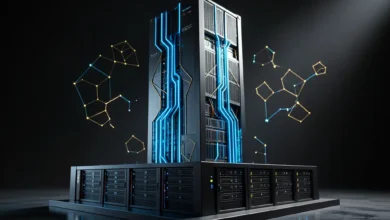
Docker has taken another significant leap in container security by dramatically expanding its Docker Hardened Images (DHI) catalog and introducing thousands of cryptographically-attested system packages. The move, which doubles the number of available hardened images and offers more than 8,000 secure Alpine Linux packages—with Debian support on the horizon—reinforces Docker’s role as a principal guardian of software supply chain integrity. For developers and enterprises alike, this update brings tools to minimize vulnerabilities across their stacks, providing an unprecedented foundation for “secure by default” containerized deployments.
Doubling Down on Hardened Images
The heart of Docker’s announcement is the expansion of its DHI catalog, which now encompasses over 2,000 hardened container images, up from just over 1,000 at the start of the latest initiative. Each of these images is engineered for production use, with a focus on minimal attack surface, minimal component footprint, and robust provenance documentation. By delivering images that undergo continuous security scanning, remediation, and cryptographic signing, Docker aims to help organizations combat the relentless threat from software supply chain compromises.
These images are part of a strategy long encouraged by governments, enterprise CISOs, and cloud-native security architects: ship containers based on purpose-built, minimal, and fully-auditable elements. With DHI images, teams no longer have to choose between agility and risk mitigation—they get both, right out of the box.
System Packages: Going Deeper Into the Container
Docker’s latest innovation is the release of more than 8,000 hardened Alpine system packages—and with Debian package support coming soon, the catalog is poised for even broader impact. Developers often need to install system-level packages (like language runtimes, networking tools, or security libraries) in their containers. Traditionally, these additions have introduced new vulnerabilities, as most upstream packages are updated independently, with inconsistent security postures or delayed CVE remediation.
The new Docker-hardened system packages are thoroughly scanned, patched, and cryptographically attested. This means developers can confidently extend base images without undermining their security posture, drastically reducing their workload and risk profile. It’s a response to a longstanding developer challenge: how to safely “go deeper” and customize containers without rolling the dice on supply chain safety.
SLSA Build Level 3: Raising the Bar for Supply Chain Proof
A central pillar in Docker’s hardened images and package catalog is its use of the Supply-chain Levels for Software Artifacts (SLSA) Build Level 3 pipeline. SLSA 3 requires a documented, tamper-resistant build process with detailed provenance logs and cryptographic attestations. In practice, this means every hardened container image and package is built in a controlled, verifiable environment—ensuring the origin, contents, and build process can be proven to any auditor or security tool.
Compared to traditional container images with unknown or poorly-documented provenance, this approach gives teams the evidence they need to comply with increasingly strict regulatory, enterprise, and customer requirements. It also delivers peace of mind: a compromised build pipeline or package exploit in the wider ecosystem cannot silently poison the software supply chain, at least not through officially-sanctioned Docker base images and packages.
Near-Zero CVEs: Security Without the Churn
One of the most remarkable claims tied to the Docker Hardened Images and package catalog is the achievement of a “near-zero CVE posture”. By stripping away nonessential components, backporting upstream patches, and rigorously scanning for vulnerabilities, Docker has managed to reduce outstanding CVEs by more than 95% compared to traditional container baselines. In a threat landscape where “patch Tuesday” is never far enough away, this near-zero approach means development teams aren’t constantly chasing new vulnerabilities or interrupted by emergency patching exercises.
Developers and operators benefit from streamlined auditing: comprehensive Software Bill of Materials (SBOM) reporting and transparent CVE documentation accompany every artifact. When supply chain vulnerabilities do surface, organizations can respond faster—upgrading with confidence, knowing that remediation is prioritized and delivered promptly.
Integration with Developer Workflows and AI Assistants
Docker’s security improvements aren’t restricted to the images and packages themselves. The company has also introduced tooling to make adoption seamless. Docker’s AI Assistant, now integrated into the Docker platform, can scan existing containers in a developer’s project, recommend equivalent hardened images, and automate the update process. This reduces friction for developers keen to adopt the new catalog—making security defaults not just preferable, but practical.
For large organizations, this automation fills an urgent need. DevSecOps teams can maximize adoption, enforce policy, and eliminate vulnerable base images without bottlenecking developer productivity. The result is a more secure, more agile software delivery pipeline, even at scale.
Free and Open for All: Democratizing Secure Software
Docker’s commitment extends beyond product. In a bold move, the company open-sourced its entire catalog of Docker Hardened Images and system packages under the Apache 2.0 license. Now available at dhi.io, Docker Hub, and related repositories, these artifacts are free for developers, open source projects, academic institutions, and enterprises worldwide.
This democratization was underscored in Docker’s own words: “The goal is simple: be able to secure your application from main() down.” By removing commercial barriers and licensing surprises, Docker is betting that widespread adoption will have a multiplier effect on global software resilience.
Enterprise-Grade Support for Critical Needs
While the core catalog is free and open-source, Docker also offers a paid “Enterprise” tier and an “Extended Lifecycle Support” (ELS) add-on for organizations with regulatory or critical infrastructure requirements. These premium services guarantee rapid vulnerability remediation (typically within seven days for critical issues), deliver STIG-ready and FIPS-compliant images, and support custom organizational needs such as custom certificates or proprietary runtime integrations.
For legacy workloads or long-lived applications, the ELS add-on keeps essential images patched and supported for up to five years after standard upstream support ends, ensuring organizations don’t have to sacrifice security for operational continuity.
Industry Impact and the Bigger Picture
The significance of Docker’s expansion reverberates across the rapidly evolving software supply chain landscape. Cyberattacks targeting open-source software dependencies and container base images are now routine—malicious code can work its way into production systems through even the most innocuous-seeming component. Docker’s approach, by offering open, transparent, and fully-audited images and packages, provides a much-needed bulwark against such threats.
This shift also introduces a new competitive dynamic in the container ecosystem. Startups and newcomers, such as Echo Software (which recently announced significant investment in AI-maintained vulnerability-free images), are raising the bar for what constitutes industry-standard container security. Yet Docker’s sweeping move to open, free, and cryptographically-verifiable supply chain elements sets a high watermark for incumbent and challenger alike.
Adoption, Next Steps, and Developer Response
While precise adoption metrics remain undisclosed, Docker cites strong interest from enterprise, developer, and open-source segments. The early feedback is clear: developers no longer have to accept a “security trade-off” when building or extending containers, nor do security teams have to sacrifice agility for compliance.
The pipeline is slated for further expansion—additional Debian packages, new languages, hardened libraries, and specialized workloads are all on the near-term roadmap. Docker’s ultimate aspiration: make “hardened by default” the global status quo for production workloads.
Where to Learn More and Get Started
- Explore the Hardened Images catalog.
- Dive into technical details and documentation at the Docker Hardened Images Product Page.
- Read Docker’s official blog announcement for hardened packages: Announcing Docker Hardened System Packages.
- Access the free catalog at dhi.io.
For software creators wrestling with the modern demands of DevSecOps, governance, and relentless security audits, Docker’s hardened images and packages offer new hope—and a credible path to near-zero vulnerabilities, from code to cloud.